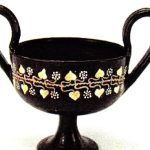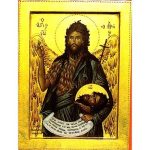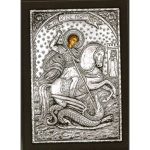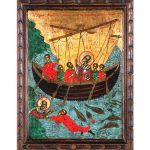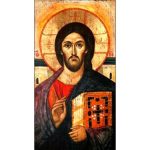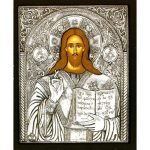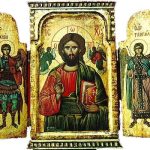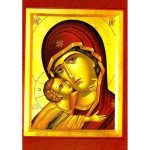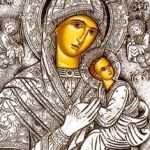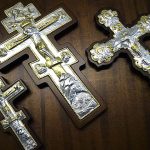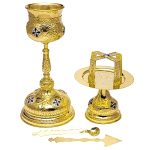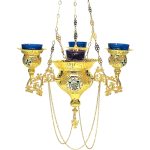
Byzantine art embodies multiple important crafts, from architecture to hagiography and painting in general. In addition to icons, the monks during the Byzantine period created exceptional examples of Byzantine decorative and post-Byzantine art of great value. These works are gifts that sometimes come from the piety of the Christian world and sometimes from indigenous productions of monks or laypeople who lived mainly on Mount Athos.
The productions of these so-called secondary arts can be classified according to the materials from which they are made wood, metal, stone, precious stones, textiles.

Sculpture and engraving on wood have produced admirable works of Byzantine art. Among them, the golden iconostasis of churches and chapels, made between the 16th and 19th centuries to replace the old marble icons, testify to an admirable technique. Their decoration with designs taken both from the plant kingdom (branches, leaves, fruits) and from the animal kingdom (birds, fish), gave way to reliefs during the 16th and 17th centuries, and to sculptures with round projections in the period spanning over the 18th and 19th centuries.
The shrines, lecterns and doors of the cathedrals are also remarkable examples of woodcarving in the Byzantine art, sometimes combined with admirable inlays of mother-of-pearl, silver and ivory. Pilgrims are small pieces of furniture where the monks present the image of the saint for pilgrimage to whom the holiday corresponds, while the lecterns, with their typical octagonal shape, are the pieces of furniture placed in the middle of the choir.
On Athos, engraving has also produced exceptional objects of Byzantine art in steatite, agate, ophite and jasper, among which are the “diskario of Pulcheria” kept in the Xiropotamos monastery (14th century), the Dodekaeorton (12th century) and Agios Georgios (16th century) of Vatopedi, the Virgin and Saints George and Demetrius of the Great Lavra (12th century), as well as the Transfiguration of Xenophon (12th century).
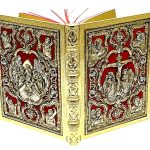
Among the byzantine art works in ivory, are some amazing greek orthodox icons like the one of the Crucifixion that is kept in the Dionysiou Monastery and dates back to the 10th century stands out. No less valuable is the wood carving that decorates certain pectoral crosses (gobs), icons or covers of holy books. The masterpiece of this art is the cover of a 13th-century psalter kept in the Dionysios Monastery with scenes from the Old and New Testaments, as well as 220 faces carved on a surface of only 170 square centimeters.

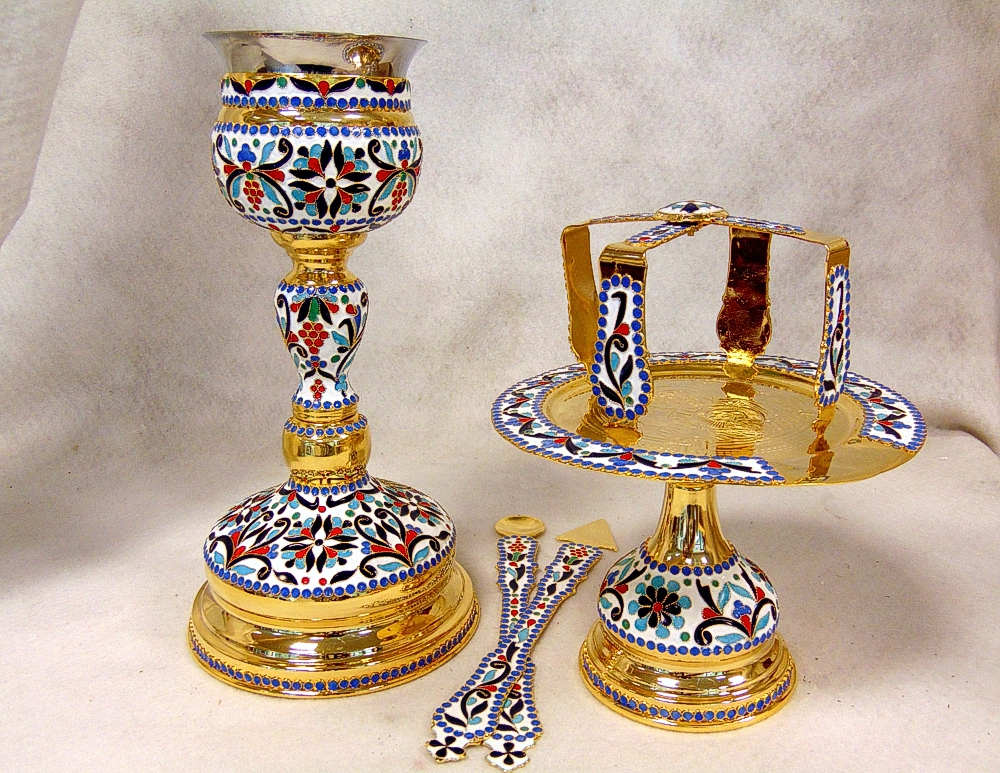
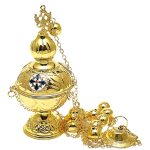
Goldsmithing and metalwork – melted, engraved or forged – presented in the form of thousands of objects and utensils of worship, are the arts that represent the necessary object of splendor and luxury of religious ceremonies. The Churches and treasuries of the monasteries are full of gold and silver objects inspired by Byzantine art, decorated with precious stones and enamel: reliquaries, crosses, mitres, image covers, portable objects, chalices, pastoral staffs, bindings. Reliquary boxes containing pieces of the Holy Cross (“cross boxes”) are particularly valuable.
The monastery byzantine art also contains luxurious ecclesiastical fabrics and priestly silk garments embroidered in gold and silver. Liturgical fabric is used in the Epitaph, symbol of the Savior’s shrouds, with the image of the dead Lord surrounded by Angels, the apron that we put in the shrine for the image to rest on, the air, veil with which we cover the Holy Grail and the Discario, and the gate, a curtain that covers the door of the iconostasis.
Priestly vestments have a different shape and name according to religious use and the degree of priesthood of the wearer. There is the sack (high priest’s felonium), the omophorion (a strip of silk decorated with crosses), the epitrachium (of the priest), the orarium (the deacon’s epitaph), the epimanikia (cuffs) and the kneecap (mostly diamond-shaped for the high church officials). The productions of these so-called minor arts express the artistic elegance of the Byzantine and post-Byzantine world.
Find our amazing collections inspired by Byzantine art in our Hellenic Greek art shop!
No account yet?
Create an Account