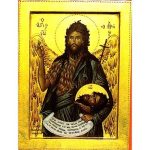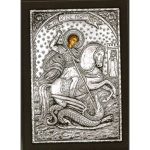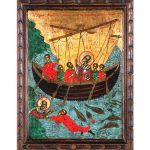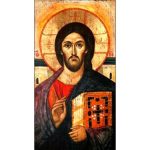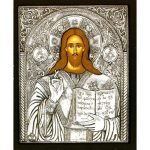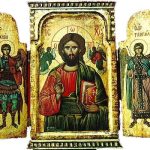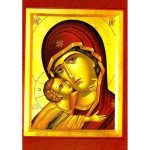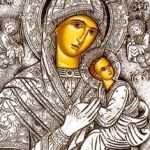
There are multiple hagiography styles developed through centuries. For example, the 14th century was a great period for Byzantine painting, which was identified at the time with the “Macedonian School”, which was active in Macedonia and Serbia and which flourished during the era of the Paleologos dynasty. The main characteristics of “Macedonian” painting are an intense realism, a deep sense of life and movement which nevertheless does not harm the fidelity of the ideals of perfection and the pure beauty of the Greek artistic tradition. The “Macedonian” artists really sought to combine liveliness of movement, power of pose, dynamism and sense of drama with purely Hellenistic grace and elegance in their hagiography style.
The Macedonian School of hagiography, whose center is Thessaloniki and whose greatest teachers are Manuel Panselinos and Georgios Kallergis, is represented on Mount Athos by the mural circles of the metropolitan church of the Protatos of Karion (first quarter of the 16th century). This style of hagiography was additionally represented by the cycles of the churches of the monasteries of Vatopedi (1312), Chilandari (1319-1320) and Pantokrator (second half of the 14th century). personality, who knew how to paint with amazing skill the life cycles of the frescoes of the Karios are the work of Manuel Panselinos, a gifted artist with a strong the Lord and the Virgin, the images of the Holy Warriors, the Holy Ascetics and the ancestors of the Lord. His art is elegant and full of grace.
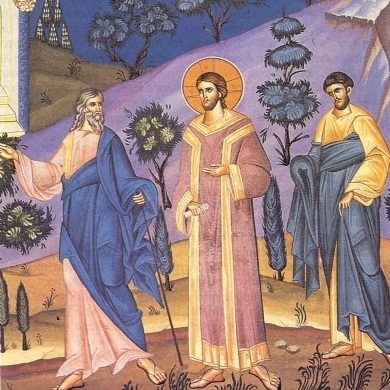
The figures of his saints in this type of greek orthodox icons are imposed by their immediate pulsating intensity, without losing anything of their nobility and priestly form. The frescoes of the Catholic church of Vatopedi are attributed to the school of Panselinos hagiography, in which, especially in the scenes of the Passion of Christ, the lively gestures of the depicted and the intense emotionality of the faces give a particularly strong realism.
Other parts of frescoes of the Macedonian School of hagiography are preserved in the Great Lavra and in the monastery of Agios Pavlos. It is possible that the primary decoration of the cathedral of the Great Lavra, now lost, was the work of Manuel Panselinos.

In the second half of the 15th century and at the beginning of the following century, another artistic Byzantine school of hagiography developed in Crete this time. This idealistic school, conservative, traditional and monastic, sent its own artists from the island of Crete, first of all to Meteora and then to Mount Athos and to all the Orthodox countries.
Because of its conservative and idealistic character, its dark tones and the contemplative atmosphere it creates, “Cretan” art thus seems an art best suited to a serious church or to monks destined for life prayer and repentance. An art that was deprived of the grandeur of imperial patronage. The artists of this school are deeply influenced by the fragile and meticulous technique of hagiography and miniature painting. They leave aside the large pictorial subjects and extended compositions of the Macedonian School in favor of scenes used as separate illustrations or, to put it another way, as pictures or miniatures.
The main representative and codifier of the “Cretan School hagioraphy” is the monk Theofanis from Crete (Theofanis Strelitsas), to whom we owe, in addition to the frescoes of the monastery of Agios Nikolaos in Meteora and the decoration of its main temple (1525), perhaps also the altars (after 1535) of the same monasteries, which he created with the help of his son Simeon. We attribute to the disciples of Theophanes and his imitators the painted decoration of many monastery churches, altars and chapels of Athos: to a certain Antonius we attribute the pulpit and the temple of the church of the Xenophon monastery.
In Jorzis, originally from Crete, the church of the Dionysiou monastery (1547). In Franko Catalano, from Boeotia, the chapel of Agios Nikolaos of the Great Lavra (1560). In a second Theophanes the narthex of the church of the Xenophon monastery (1563). To unknown artists, the chapel of the cell of Molyvoklisia (1536), the chapel of Agios John the Evangelist of the cell of Agios Prokopios (1537) and the church of the Koutloumousiou monastery (1540). Also, other Hagiography artworks are the altar of the Filotheou monastery (1540), the chapel of Agios Georgios of the Agios Pavlos monastery (1555), the church of the Dochiariou monastery (1568), the table and the circle of the Apocalypse of the Dionysiou monastery (end of the 16th century).
Discover our extensive collections inspired by all these hagiography styles in our greek art shop!
No account yet?
Create an Account