
Phidias woke up on this fine spring morning of 432 BC at the crack of dawn as he used to do every day while in Olympia.
He walked in haste on the short path connecting his dormitory to the workshop on the sacred grounds where every four years athletes from all over Greece met to compete with each other at the Games dedicated to Olympian Zeus.
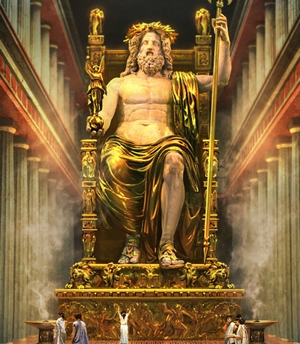
He was in a hurry because his greatest work, the chryselephantine statue of Olympian Zeus (later to be considered one of the seven Wonders of the Ancient World) would soon be ready.
He only stopped briefly to pick up a few sprigs of wild fennel that grew on the banks of the Alphios River. They would make a strong and aromatic tea that soothed his body and mind during work.
As soon as he arrived at the workshop – long before the other craftsmen and the slaves – he started warming some water to make his tea.
However his favorite mug was nowhere to be found. It has happened before that someone of the workers simply took it with him and forgot to bring it back.
Phidias was furious! He decided to end the problem once and for all. He grabbed one of the other mugs hanging on the wall above the water basin and inscribed on the bottom “Phidia eimi” (I belong to Phidias).
He almost wished now to catch one his workers drinking from his mug!
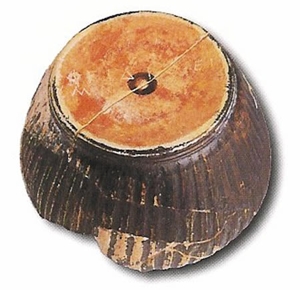

Phidias lived between 480 and 430 BC, creating his masterpieces during the golden era of the classical period when the arts and crafts of the ancient Greeks (especially in Athens) reached an unprecedented peak.
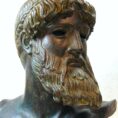
He was undoubtedly the greatest sculptor of the ancient Greek world. He worked on the statues and pediments of the Parthenon at the Athenian Acropolis and created the two most famous statues of the antiquity: The gold and ivory statues of Athena Parthenos and Olympian Zeus.
However the notion of art and artist in ancient Greece was very much different than what it is today.
In our modern culture art is:
– acquired as an investment and is considered a symbol of wealth and status.
– most often purchased and exhibited privately.
– appreciated by highly experienced trained professionals who determine its value and importance.
– of no practical or functional use, its value is mainly aesthetic.
Also in our time an artist is considered to be:
– a fashionable, if not eccentric, outsider, whose reputation is determined by experts, not the general public.
– a “free” spirit who is expected to express their own thoughts, images and vision through their work and not work exclusively on commission.
– someone who may sometimes receive financial support from state owned institutions but does not depend solely on public funds to create their work.
Ancient Greek art had nothing in common with the points listed above.
In ancient Greece, art:
– was never acquired as an investment, nor was it regarded a status or wealth symbol.
– was exhibited exclusively publicly. Until the Roman era there were almost no works of art in private ownership.
– was not appreciated or appraised by experts, only the community indirectly determined its significance.
– had mainly a religious function or served as commemoration for military or athletic events.
An artist in ancient Greece was a common citizen whose work was constantly judged by the public and worked mainly on commission by the state. An artist never used his work as a means of personal artistic expression. Their focus was on technical accomplishment in representing their subject – whether naturalistic or idealistic – and not on making a personal statement.
Perhaps the most characteristic feature of ancient Greek art was the uncontested acceptance of public’s expectations of what constitutes art.
Statues & Sculpture originated around the middle of the 7th century BC. Its initial inspiration owes much to Egypt.
Marble, limestone, bronze, terracotta, wood, or a combination of gold and ivory known as chryselephantine, were the chief materials. Accessories such as armor and jewelry were often reproduced in a different material.
The chief artistic inspiration throughout antiquity was the physically perfect, primarily male, body, as exemplified by god Apollo, who is invariably depicted as a youth in peak physical condition; and while the male body was depicted almost always nude in explicit anatomical detail, statues depicting women in the archaic and classical era where clothed and quite conservative in comparison.
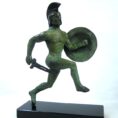
Add a piece of Ancient Greek history to your house! Discover our collection of Greek Statues
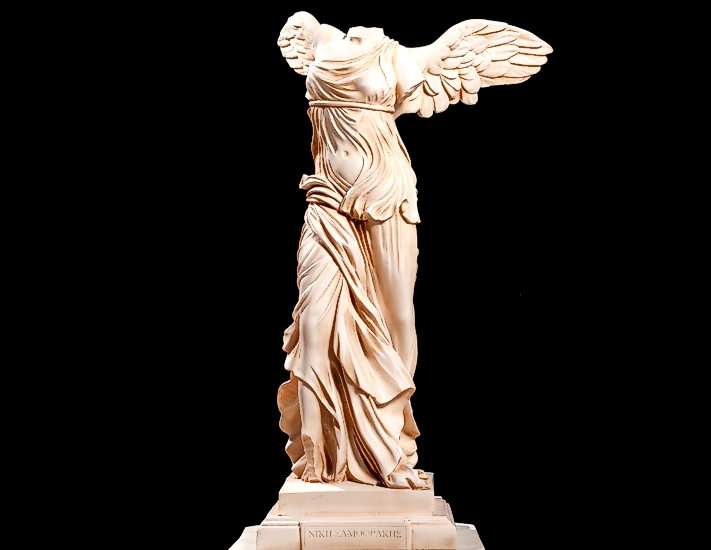
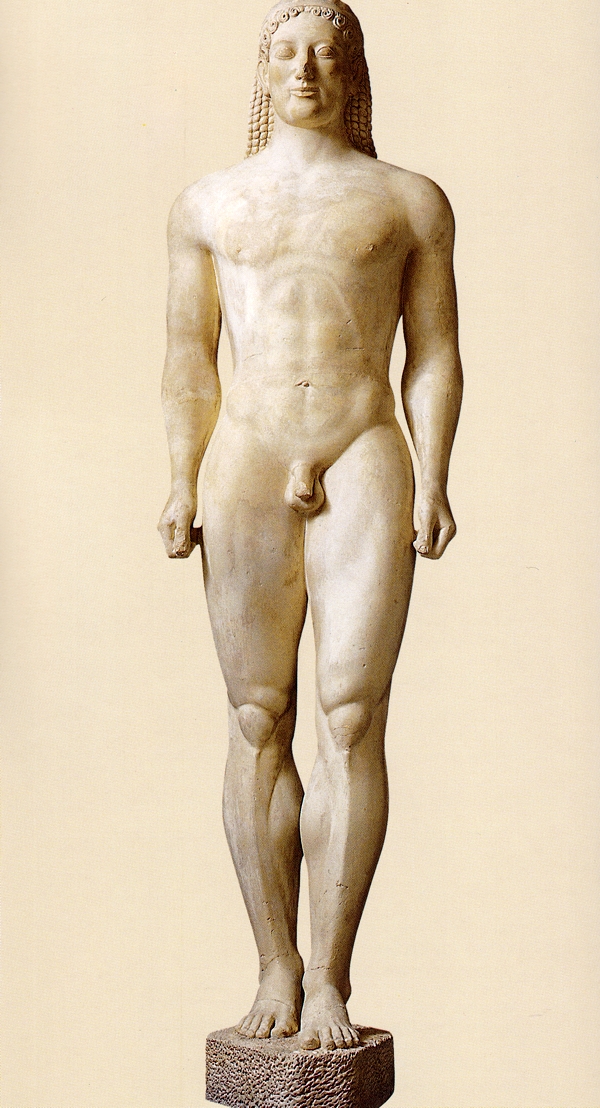
An example of this contrast were the archaic Kouros and Kore statues. The male statues known as Kouros (youth) stand nude, frontally with one foot advanced, hands at side, fists clenched.
On the other hand, statues of young females called Kore (girl) are invariably clothed. They are depicted holding their skirt with one hand and holding out the other for an offering.
The craft of sculpting reached its peak during the Hellenistic period (323-31 BC). The statues were now explicit in anatomical details and extra attention was paid to the quality and texture of flesh and muscle.
The female statues were often nude and deliberately sensual, something that occasionally made them objects of indecent assaults as was the case with the Aphrodite of Cnidos.
There are mainly two categories of ancient Greek bas reliefs; shallow reliefs used mainly as epitaphs or gravestones and metope friezes that adorned the pediments of temples and public buildings.
At the start of the 6th century the gravestones were plain tall shafts (stele) but soon the shaft was carved in relief with a representation of the dead as in the famous Grave Stele of Hegeso. Youths are shown as athletes, men as warriors (as for example in the Column of Dexileo), women holding a child or being served by maids.
Shallow reliefs appear on other monuments as well, like statues, and serve as votive offerings in sanctuaries. Here the scenes are taken from day-to-day life, athletes competing, young men playing games or depict deities and acts of worships like a libation or a ceremonial sacrifice.
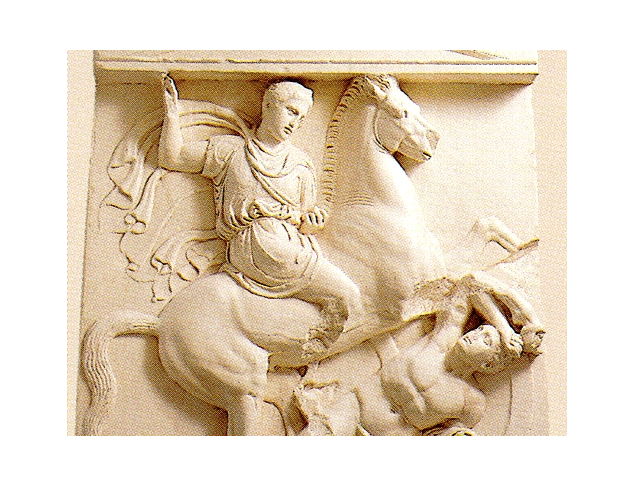
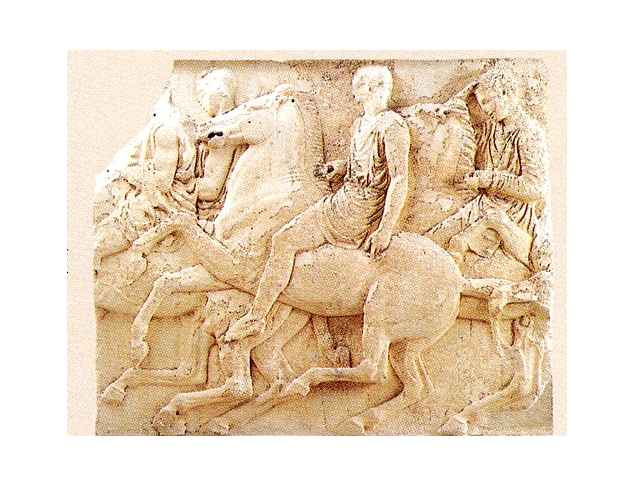
In these shallow reliefs the figures are slight protrusions in relation to the smooth background, giving the impression of a three-dimensional painting. The background was often painted in a vivid blue or red color to help the lighter figures stand out.
The metope friezes on the other hand showed mainly figures carved in the round almost wholly detached from the background, allowing thus intelligible three-quarter views. These were narrative friezes that enhanced and helped to articulate parts of the building. Its themes added to the sanctity of the temple often carrying profound allegoric religious or political messages.
Fights are a favored theme but pursuits are used as well with the action occasionally carried across from one metope to the next (see for example the Horsemen Relief from the Parthenon frieze).
Fresco is the art of painting on plastered walls. It’s a method of painting water-based pigments on freshly applied plaster, usually on wall surfaces.
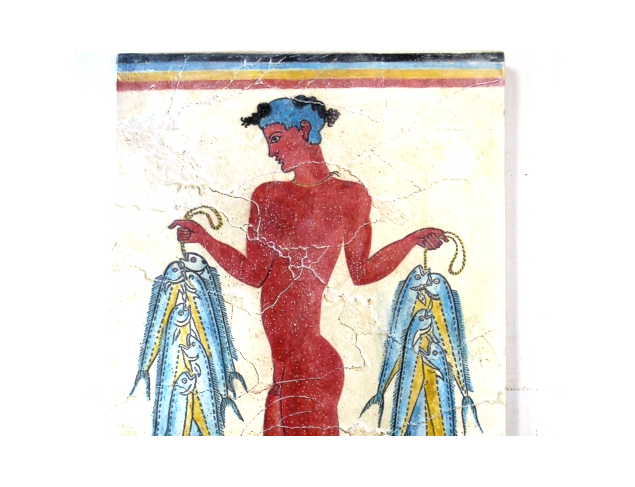
This medium was one of ancient Greek civilization’s early art forms: interiors of villas and palaces were covered with fanciful impressions of life and nature in the Greek world. Due to the fast drying time of plaster, frescoes were executed quickly with fluid brushstrokes and graceful curving lines, producing dynamic movement of the figures and landscapes. Pigments used for fresco during this time included saffron, iron ore and indigo.
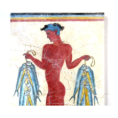
The most characteristic ancient Greek frescoes that have been preserved to date are the frescoes of the Akrotiri settlement on the island of Santorini.

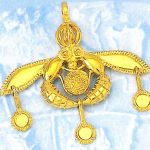
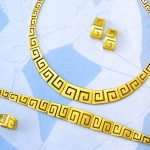
The majority of the ancient Greek jewelry was made of gold rather than silver.
The arts of filigree and granulation had been mastered by the Greeks long before the 5th century BC. During the classical era jewelry became more colorful with inlays of colored stones and enamel.
Few artists’ names are preserved, as for example Dexamenos of Chios.
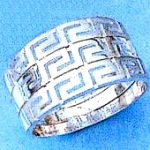
Enrich your jewelry collection with the prettiest greek jewelry!
Fired clay is practically indestructible, so the ceramic artifacts ancient Greeks have left us are perhaps the most abundant source of information about styles, subjects, Mythology and everyday life in ancient Greece.
Pottery vessels were essential and used every day in all instances and for all kinds of purposes. Special shapes and designs were developed for different uses, from common vessels like the amphora – a storage vessel for oil, wine and also sometimes wheat – or the hydria, for carrying water, to highly specialized vases as the alabastron – containing perfume and massage oils – or the lebes gamikos, a ceremonial vase used only at weddings.
Chronologically and stylistically we categorize the ancient Greek pottery in the following periods:
See more of the Greek Pottery!
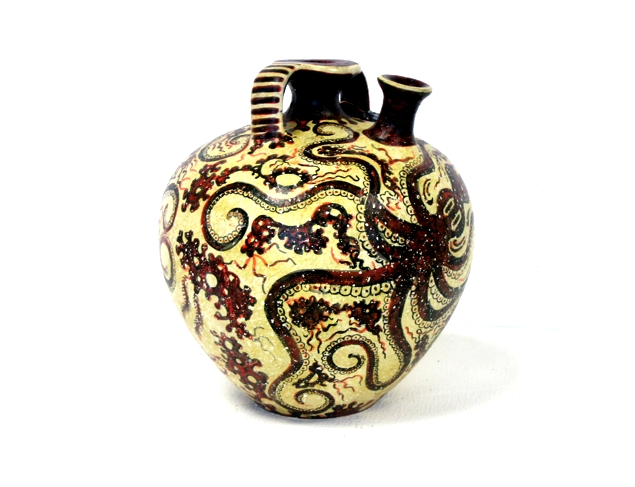
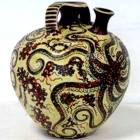
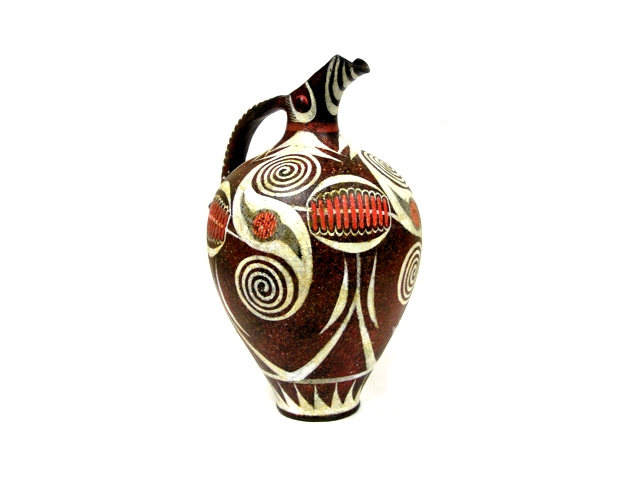
The Minoan civilization flourished on the island of Crete from the 15th century BC until about 1200 BC when it was destroyed, first by the tsunami created by the powerful eruption of the volcano on the island of Thera and then by invasions of other Greek tribes from the Greek mainland.
The Minoans were a peaceful sea-faring people who came early in contact and made business with the Phoenicians and the Egyptians. It was therefore essential for them to develop functional pottery vessels of top quality that could safely store their produce while sailing across the Mediterranean.
See more of the Minoan Pottery!
The subjects on the vases were naturalistic, the inspiration drawn from the Cretan nature and the Aegean Sea. Flowers, octopuses and sea life were common themes.
As Harriet Boyd Hawes, an early excavator of Crete, puts it: “At the height of his power, the Minoan potter went directly to nature for his inspirations. His designs are full of grace and exuberance. Reeds, grasses and flowers adorn his vases: the life of the sea is represented with astonishing fidelity.”
Common pottery shapes of the era were the pseudostomos – a false-neck amphora, the sharp bottom amphora – ideal as a storage vessel in the hold of the ship and the oinochoe for pouring wine.
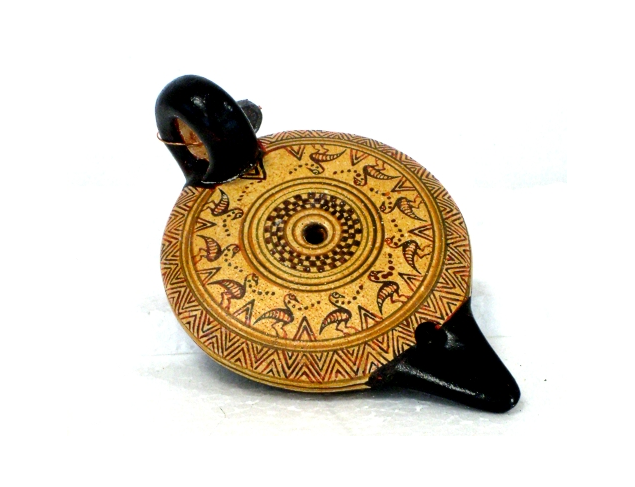
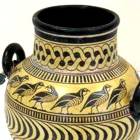
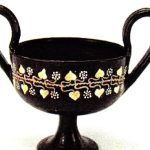
The Geometric style appeared in 900 BC and favored the rectangular space on the main body of the vase between the handles. Bold linear designs (perhaps influenced by contemporary basketwork and weaving styles) appeared in this space with vertical line decoration on either side.
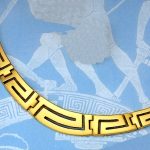
It was in this period that the Meander design (aka Greek key) first appeared (perhaps inspired by the practice of wrapping leaves around the rims of metal bowls), destined to become forever associated with Greece.
Apart from the amphora, other popular Geometric vases were the kantharos and the skyphos, both wine-drinking cups.
See more of the Geometric greek Pottery!
During the late 8th century, the traditionally angular geometric patterns were being replaced with the curvaceous flora and fauna that typify the Protocorinthian style.
The stylized geometric lines gave way to animal and human figures with rounded contours and considerable animation. Figures such as those that might have been found on Eastern rugs and textiles were dominant in a rhythmic design of floral patterns, dots and rosettes filling the entire background.
See more of the Corinthian Pottery!
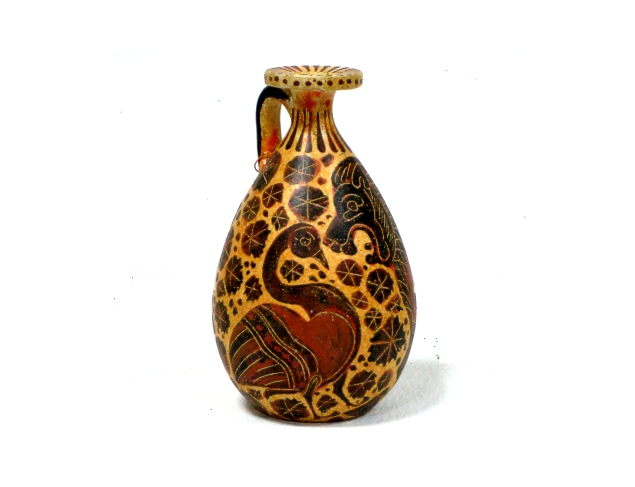

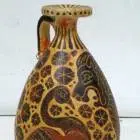
The Corinthian style was also characterized by an expanded vocabulary of motifs: sphinx, griffin, lions, etc., as well as a repertory of non-mythological animals arranged in friezes across the belly of the vase. In these friezes, painters also began to apply lotuses or palmettes.
Common Corinthian vessels are among others the olpe – an early form of a wine jug and the aryballos, a ceramic flask containing perfume and massage oils for athletes.
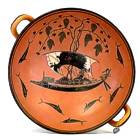
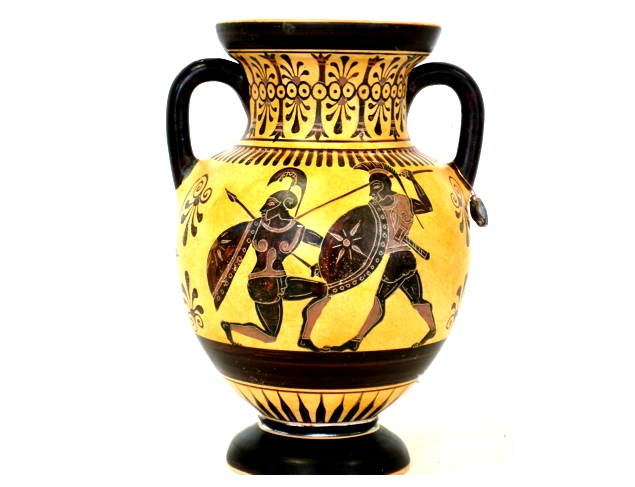
The black-figure style, developed between the 7th and 5th century BC, offers us one of the most important sources of mythology and iconography, and sometimes also for researching day-to-day ancient Greek life.
In this style, the figures were painted black on the reddish orange surface of the vases. Details within the silhouetted figures were incised before firing. A greater interest in fine details such as muscles and hair, which were added to the figures using a sharp instrument, is characteristic of the style.
See more of the Black figured Pottery!
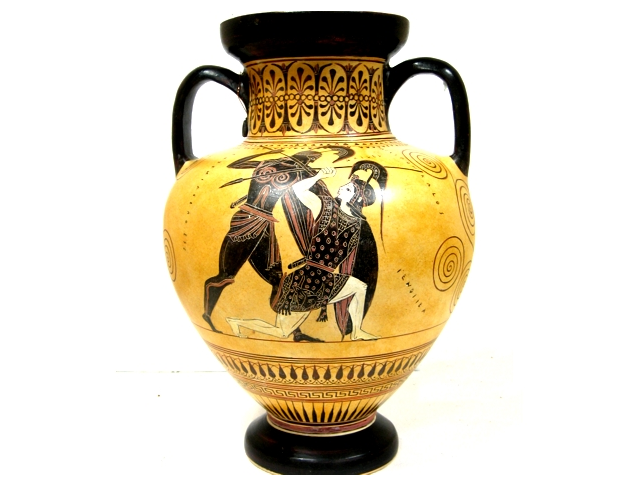
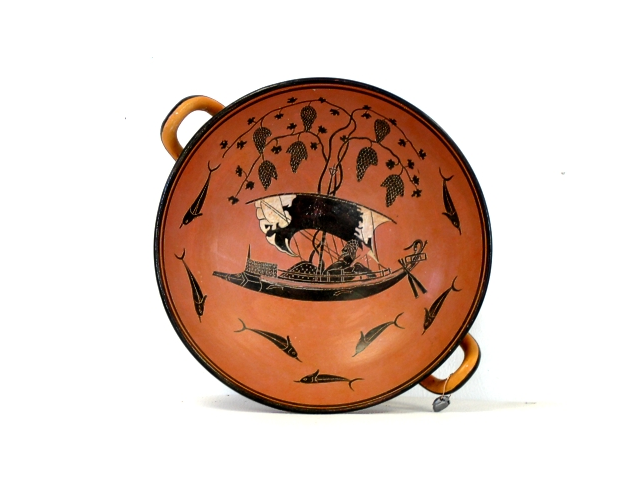
The stories were drawn by myths, the Trojan War, the adventures of Odysseus, the Argonauts and other great heroes of the Greek Mythology. Very popular were also the capering Satyrs and Maenads in the retinue of god Dionysus.
The lekythos, a small oil storage vessel, the kylix for drinking wine at symposia and the krater for mixing wine with water were, apart from the ever present amphora, the most commonly used black figured vases.
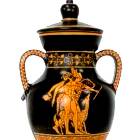
The black-figure technique was replaced by the red-figure technique around 530 BC which would endure for the next 130 years or so. Here the decoration was first outlined in black, leaving the design in the lighter reddish color of the undecorated vase.
Details were then added with a fine brush applying black or diluted black, which appeared as brown after the refining.
See more of the Red figured Pottery!
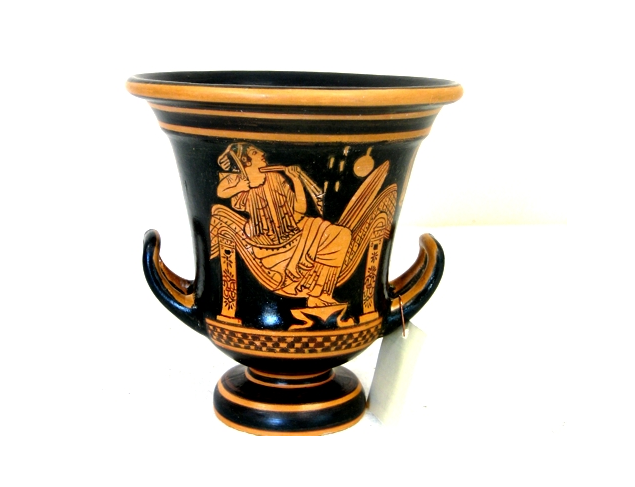
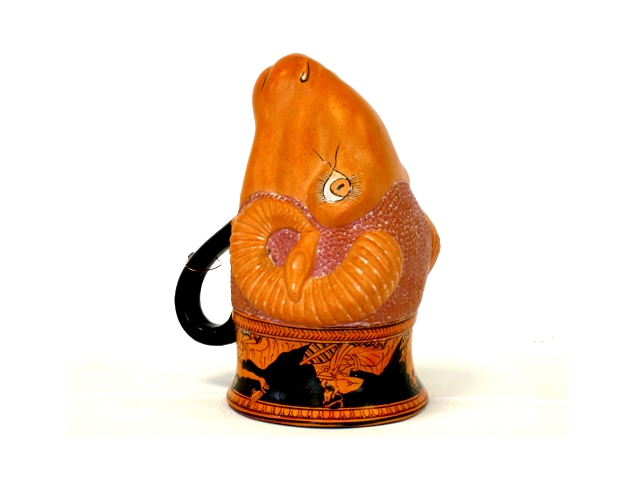
Perhaps influenced by contemporary wall painting techniques, anatomical detail, diverse facial expressions, greater detail in clothing (especially of folds, following the new fashion of the lighter chiton dress which also fascinated contemporary sculptors), greater attempts at portraying perspective, the overlapping of figures, and the depiction of everyday life such as education and sporting scenes are all characteristic of this style.
During this era new forms of pottery were developed like the pelike, a spherical belly amphora, the rhyton, a ceremonial drinking cup which often had the shape of an animal head and the psykter for cooling water.
In dealing with ancient art it is particularly important to try to see or envisage objects as they were intended, to remember that both sculpture and architecture were colored, that the sculptures had a setting quite unlike of that of any modern gallery, that even the most precious objects were for use and never displayed in a museum showcase.
Take for example the bronze statue of the Charioteer of Delphi, who is now the focus of a museum gallery, and not standing in his chariot with a team of no less admirable horses under a Greek sun.

The accidents of survival added to the esteem in which ancient Greek classical art is held and have made us not only tolerant of the fragment, the noseless, the limbless, but ready to accord them aesthetic status as subjects for the artist. This indeed they may deserve, but they were never so regarded by any ancient Greek artist.
There are other aspects in which the art of ancient Greece had a very different role than Art today. As pointed out previously, “Art for Art’s sake” was virtually an unknown concept. There was neither a real Art Market nor Collectors. All art had a function and artists were suppliers of a commodity on a par with shoemakers. The Greek language had no separate word for Art in our sense; only Craft (techne). The Muses of antiquity inspired writers, not artists; and the artists of Athens were under the protection of gods (Athena and Hephaistos) whose crafts were essentially practical or technological.
In this sense Phidias would be amazed if he were to find out that nowadays we consider even his humble tea mug, a work of art!
Find out more about the Greek Culture and Art on the website of the greek art shop Hellenic Art!
No account yet?
Create an Account