

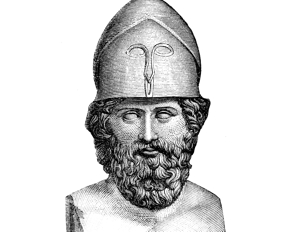
Themistocles (524–459 BC) was an Athenian politician and general.
He was one of a new breed of non-aristocratic politicians who rose to prominence in the early years of the Athenian
democracy. Elected archon in 493 BC, he convinced the polis to increase the naval power of Athens, a recurring theme in his
political career.
During the first Persian invasion of Greece, he fought at the Battle of Marathon, and was one of the 10 Athenian generals in
that battle.
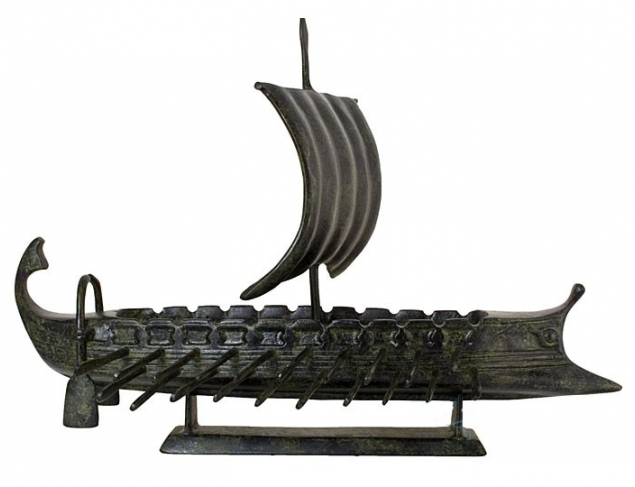
In the years after Marathon, he continued to advocate a strong Athenian navy, and in 483 BC he persuaded the Athenians to build a fleet of 200 triremes; these would prove crucial in the forthcoming conflict with Persia.
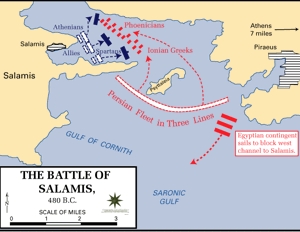
During the second invasion, he was in effective command of the Greek allied navy at the battles of Artemisium and Salamis.
Due to subterfuge on the part of Themistocles, the Allies lured the Persian fleet into the Straits of Salamis, and the decisive Greek victory there was the turning point in the invasion, which ended the following year by the defeat of the Persians at the land Battle of Plataea.

After the conflict ended, Themistocles continued to be pre-eminent amongst Athenian politicians.
However, he aroused the hostility of Sparta by ordering Athens to be re-fortified. In 472 BC, he was ostracised, and went into exile in Argos.
The Spartans now saw an opportunity to destroy Themistocles, and implicated him in the treasonous plot of their own general Pausanias.
Themistocles thus fled from Greece, and travelled to Asia Minor, where he entered the service of the Persian king Artaxerxes I.
Themistocles’s reputation was posthumously rehabilitated, and he was re-established as a hero of the Athenian (and indeed Greek) cause.
Themistocles can still reasonably be thought of as “the man most instrumental in achieving the salvation of Greece” from the Persian threat, as Plutarch describes him.
His naval policies would have a lasting impact on Athens as well, since maritime power became the cornerstone of the Athenian Empire and golden age.
Find out more about the Greek Culture and history on the website of the greek art shop Hellenic Art!
Source: Wikipedia
No account yet?
Create an Account