Theotokos icons are some of the most revered images in Orthodox Christian tradition, reflecting the deep veneration of the Virgin Mary as the Mother of God. Each icon portrays a unique aspect of the Theotokos’ role in salvation history, her relationship with Christ, and her spiritual significance to the faithful. These icons are not only works of art but also serve as windows to the divine, inviting contemplation and prayer. In the following analysis, we will explore different Theotokos icons and their meanings, emphasizing their theological importance and symbolism in Orthodox Christianity.
The Importance of Theotokos Icons
The Virgin Mary holds a special place in Orthodox theology and spirituality. As the Theotokos, meaning "God-bearer" or "Mother of God," she is honored not only for her role in the Incarnation but also as a spiritual guide and intercessor.
Theotokos icons reflect various aspects of her life, her maternal love, and her participation in the divine plan of salvation. Each icon serves to remind the faithful of Mary's unique role in pointing believers towards Christ, nurturing a deeper sense of devotion and reflection.
Theotokos Odigitria
Example: Theotokos Odigitria
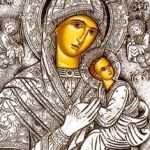
Meaning: The name Odigitria means "She who shows the way." This is one of the most common depictions of the Theotokos, highlighting her role in guiding the faithful to Christ.
Iconography:
- The Virgin Mary is shown holding the Christ Child on her left arm and pointing toward Him with her right hand, indicating that He is the "Way, the Truth, and the Life" (John 14:6).
- Christ is often depicted giving a blessing or holding a scroll, symbolizing His role as the Logos (Word of God).
- The expression of the Theotokos is usually serious and contemplative, indicating her awareness of Christ's divine mission.
Theological Significance: This icon underscores the Virgin Mary's role as an intercessor and guide, pointing the faithful to Christ, who is the source of salvation. She is not the focus of worship but directs attention to her Son.
Theotokos Platytera
Example: Theotokos Platytera
Meaning: Platytera means "wider" or "more spacious than the heavens." This icon highlights the Virgin Mary’s role in containing the infinite God within her womb.
Iconography:
- The Virgin is typically depicted in a frontal position, often enthroned, with her hands raised in an orans (prayerful) position.
- In the center of her chest is a circular medallion or a full image of the Christ Child, symbolizing her as the "container of the uncontainable."
- Christ is often shown blessing with His right hand and holding a scroll, symbolizing His divine wisdom.
Theological Significance: This icon reflects the mystery of the Incarnation—how the Virgin Mary, a human being, was able to bear and give birth to the Son of God. It is commonly found in the apse of Orthodox churches, above the altar, symbolizing her cosmic role in the divine plan of salvation.
Theotokos of the Sign
Example: Theotokos of the Sign
Meaning: This icon is based on the prophecy of Isaiah 7:14: "The Lord Himself will give you a sign: Behold, the virgin shall conceive and bear a son." It highlights the miraculous nature of Christ’s birth.
Iconography:
- The Holy Mother is depicted in a standing, orans position, with her arms raised in prayer.
- Within her chest or womb area, there is a circular mandorla (a radiant oval or circle), containing the image of the Christ Child in a blessing gesture.
- Christ is portrayed as a small, but fully formed figure, symbolizing His divinity from the moment of conception.
Theological Significance: This icon emphasizes the Virgin Mary's role in bearing God’s incarnate Son and highlights the fulfillment of Old Testament prophecies about the Messiah. It also reflects the Church's belief in the perpetual virginity of Mary.
Theotokos Glykophilousa
Example: Theotokos Glykophilousa
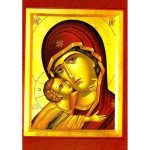
Meaning: Glykophilousa is a greek word and means "sweet kissing" and refers to the tender, loving relationship between Mary and the Christ Child.
Iconography:
- The Virgin Mary is depicted holding the Christ Child, who is shown with His cheek pressed against hers, as if embracing or kissing her.
- Christ may also be seen holding on to His mother’s neck or shoulders, showing His trust and dependence on her.
- Mary's face expresses both maternal affection and sorrow, foreshadowing Christ’s Passion.
Theological Significance: Like the Eleousa icon, this image emphasizes the deep love between the Theotokos and her Son. It also reflects Mary’s unique relationship with Christ as both His mother and the first Christian, who contemplates His mission and sacrifice.
Theotokos of the Passion
Example: Theotokos of the Passion
Meaning: This icon emphasizes the Virgin Mary’s awareness of the future Passion and Crucifixion of Christ.
Iconography:
- The Virgin Mary Theotokos is depicted holding Christ, who is looking up at angels carrying instruments of His Passion, such as the cross, nails, and spear.
- Christ is shown in fear or anxiety, clinging to His mother’s neck or tunic for comfort, while Mary looks on with sorrow or contemplation.
- The angels are depicted in the upper corners of the icon, foreshadowing the coming events of the crucifixion.
Theological Significance: This icon reflects the Virgin Mary's foreknowledge of Christ’s suffering and death, and her sorrow as a mother knowing what awaits her Son. It invites the faithful to meditate on the sacrifice of Christ and Mary’s role in salvation history.
Amazing Theotokos Icons Only a Click Away
Theotokos icons play a central role in Orthodox Christian spirituality, serving as visual and theological reminders of the Virgin Mary's unique role in God's plan of salvation. Each icon type, from the Odigitria to the Glykophilousa, presents different aspects of her relationship with Christ and her guidance to the faithful.
These greek orthodox icons invite believers to deepen their devotion, reflecting on the mystery of the Incarnation and the sacrificial love of both Mary and her Son. Through these sacred images, the faithful are continually drawn closer to Jesus Christ, following the example of the most holy Theotokos as the ultimate guide to the path of salvation.
Find what you need for you or for a wonderful gift only in our greek art shop!