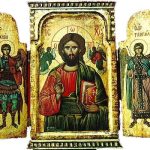
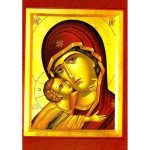
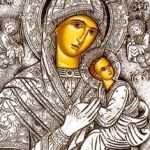
Jesus Orthodox icons hold deep theological significance and vary widely in style and symbolism, each portraying different aspects of Christ’s life, teachings, and divine nature. Below, we explore some of the most iconic representations of Christ in Jesus Orthodox icons within Orthodox Christian art, shedding light on their historical, artistic, and spiritual significance.
The Importance of Jesus orthodox icons in Iconography
Jesus Orthodox icons are not merely artistic representations; they are considered sacred tools for spiritual connection and reflection. In the Orthodox tradition, icons serve as "windows to heaven," inviting the faithful to contemplate the divine mysteries of Christ’s life and teachings. Each icon type, from Christ Pantocrator to Christ the Good Shepherd, reflects a specific aspect of His nature and ministry.
Christ Pantocrator
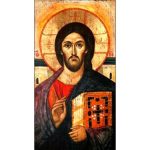
Example: Christ Pantocrator of Mt Sinai
Meaning: "Pantocrator" means "Ruler of All" or "Almighty." This is one of the most common and significant Jesus Orthodox icons, representing Him as the Lord of the Universe and the ultimate judge.
Iconography:
- Christ is usually shown from the waist up, often enthroned, with a solemn and powerful expression.
- He holds a Gospel book in His left hand, symbolizing His teaching and the Word of God.
- His right hand is raised in blessing, with fingers forming the IC XC (Ιησούς Χριστός – Jesus Christ) gesture, symbolizing both His divinity and humanity.
- His halo typically features a cross with the Greek letters "Ο ѠΝ" (Ho On), meaning "The One Who Is," a reference to God’s name in Exodus 3:14.
Theological Significance: This icon emphasizes Christ's dual nature—divine and human—and His authority over all creation. It is often found in the central dome or above the altar in Orthodox churches, symbolizing His omnipresence and kingship.
Christ the Teacher
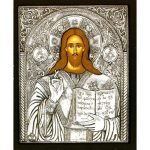
Example: Jesus Christ the Light Giver with Open Book
Meaning: This one from the Jesus Orthodox Icons emphasizes Christ as the Divine Teacher, the source of wisdom and truth.
Iconography:
- Christ is often depicted standing or seated, holding an open Gospel book in His left hand. The text on the book often quotes Christ’s sayings from the Gospels, such as "I am the light of the world" (John 8:12) or "Come to me, all you who are weary and burdened" (Matthew 11:28).
- His right hand is raised in blessing, as in the Pantocrator icon.
- His expression is calm and compassionate, representing His role as a guide and teacher of humanity.
Theological Significance: This icon represents Christ as the embodiment of divine wisdom and the source of spiritual knowledge. It highlights His role as the one who leads the faithful to the truth.
Christ Emmanuel
Example: Panaghia Axion Esti
Meaning: "Emmanuel" means "God with us" (Matthew 1:23), referring to the prophecy of Isaiah about the coming of the Messiah.
Iconography:
- This icon depicts Christ as a young boy or adolescent, sometimes enthroned or held by the Virgin Mary in icons of the Mother of God.
- He is often shown with a mature and serene expression despite His youthful appearance, symbolizing His pre-existent divine wisdom even in His humanity.
Theological Significance: The Christ Emmanuel icon emphasizes the mystery of the Incarnation—God becoming human in the person of Jesus. It reminds the faithful of Christ’s humility in taking on human flesh while affirming His divine nature even from birth.
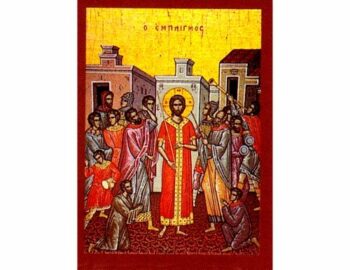
Christ the Bridegroom
Example: Nymphios Christ the Bridegroom
Meaning: This icon, often used during Holy Week, portrays Christ as the Bridegroom of the Church, a theme rooted in the parables of the Bridegroom in the Gospels (Matthew 25:1-13).
Iconography:
- Christ is depicted with a crown of thorns, often wearing a purple robe, which represents the mocking and suffering He endured during His Passion.
- His hands are bound, symbolizing His voluntary submission to suffering and death for the sake of humanity.
- His expression is one of profound humility and patience, often evoking compassion from the viewer.
Theological Significance: This icon highlights Christ’s sacrificial love for the Church, His bride, and His willing acceptance of suffering for the salvation of the world. It invites reflection on His Passion and the theme of watchfulness in the Christian life, as seen in the parable of the Ten Virgins.
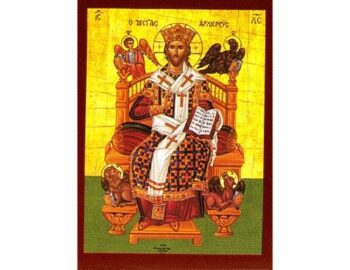
Christ the High Priest
Example: The Great High Priest
Meaning: This icon depicts Christ as the eternal High Priest, based on New Testament theology in the Epistle to the Hebrews, where Christ is described as the ultimate mediator between God and humanity (Hebrews 4:14-16).
Iconography:
- Christ is depicted wearing liturgical vestments, often a bishop’s omophorion (a stole that symbolizes His role as the Good Shepherd).
- He may be shown holding a Gospel book or a chalice, emphasizing His role in the Eucharist as both the priest and the sacrifice.
- His expression is usually one of dignity and serenity, reflecting His role as the intercessor for humanity before the Father.
Theological Significance: This icon emphasizes Christ’s role as the mediator of the New Covenant, the one who offers Himself as the perfect sacrifice for the sins of the world. It highlights His ongoing priestly ministry in the Church through the sacraments, particularly the Eucharist.
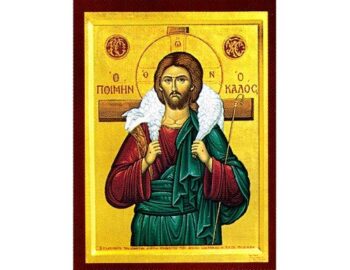
Christ the Good Shepherd
Example: The Good Shepherd
Meaning: This Jesus Orthodox icon is based on Christ’s declaration in the Gospel of John: "I am the Good Shepherd" (John 10:11).
Iconography:
- Christ is depicted as a shepherd, carrying a lamb over His shoulders or standing among sheep.
- His expression is gentle and compassionate, symbolizing His care for His flock.
- Sometimes the lamb represents individual souls, and at other times, it symbolizes Christ Himself, prefiguring His sacrifice as the Lamb of God.
Theological Significance: This icon reflects Christ’s pastoral care and His role as the protector and guide of His people. It also highlights the theme of salvation, as the Good Shepherd lays down His life for His sheep.
Christ in Majesty
Example: Jesus Christ Enthroned
Meaning: This type of icon portrays Christ as the glorified and exalted Lord, often in scenes of His second coming or in the context of the Last Judgment.
Iconography:
- Christ is often shown seated on a throne, surrounded by angels or saints.
- His right hand is raised in blessing, and His left hand holds the Gospel or a scepter, symbolizing His authority over the world.
- This icon often includes cosmic symbols such as the sun, moon, or stars, representing Christ’s sovereignty over all creation.
Theological Significance: This icon emphasizes Christ's kingship and His role as the final judge of all humanity. It reflects the eschatological hope of the Second Coming and the establishment of His eternal kingdom.
Christ the Suffering Servant
Example: Extreme Humility
Meaning: This orthodox icon depicts Christ in His deepest humility and suffering, based on the prophecy of the "Suffering Servant" in Isaiah (Isaiah 53:1-12).
Iconography:
- Christ is depicted bound and crowned with thorns, wearing the purple robe of mockery.
- His hands may be crossed in front of Him, symbolizing His submission to the Father’s will and His impending crucifixion.
- His expression is one of patience, humility, and compassion.
Theological Significance: This icon focuses on Christ’s Passion and His voluntary acceptance of suffering for the redemption of humanity. It encourages meditation on the depth of His humility and love for humanity.
A great Variety of Jesus Orthodox Icons One Click Away
These Jesus Orthodox icons are deeply significant in theology, art, and tradition. They represent various aspects of Christ's life and teachings, providing a profound connection to the divine. Through different elements like His gestures, expressions, and symbols, these icons offer a window into the mysteries of the Orthodox Christian faith. Find the great variety of Jesus' and other greek orthodox icons in our online greek art shop.